← Feed
USA
•
May 21, 2026
An F1 Visa Student’s Guide to Navigating the New Banking Rules
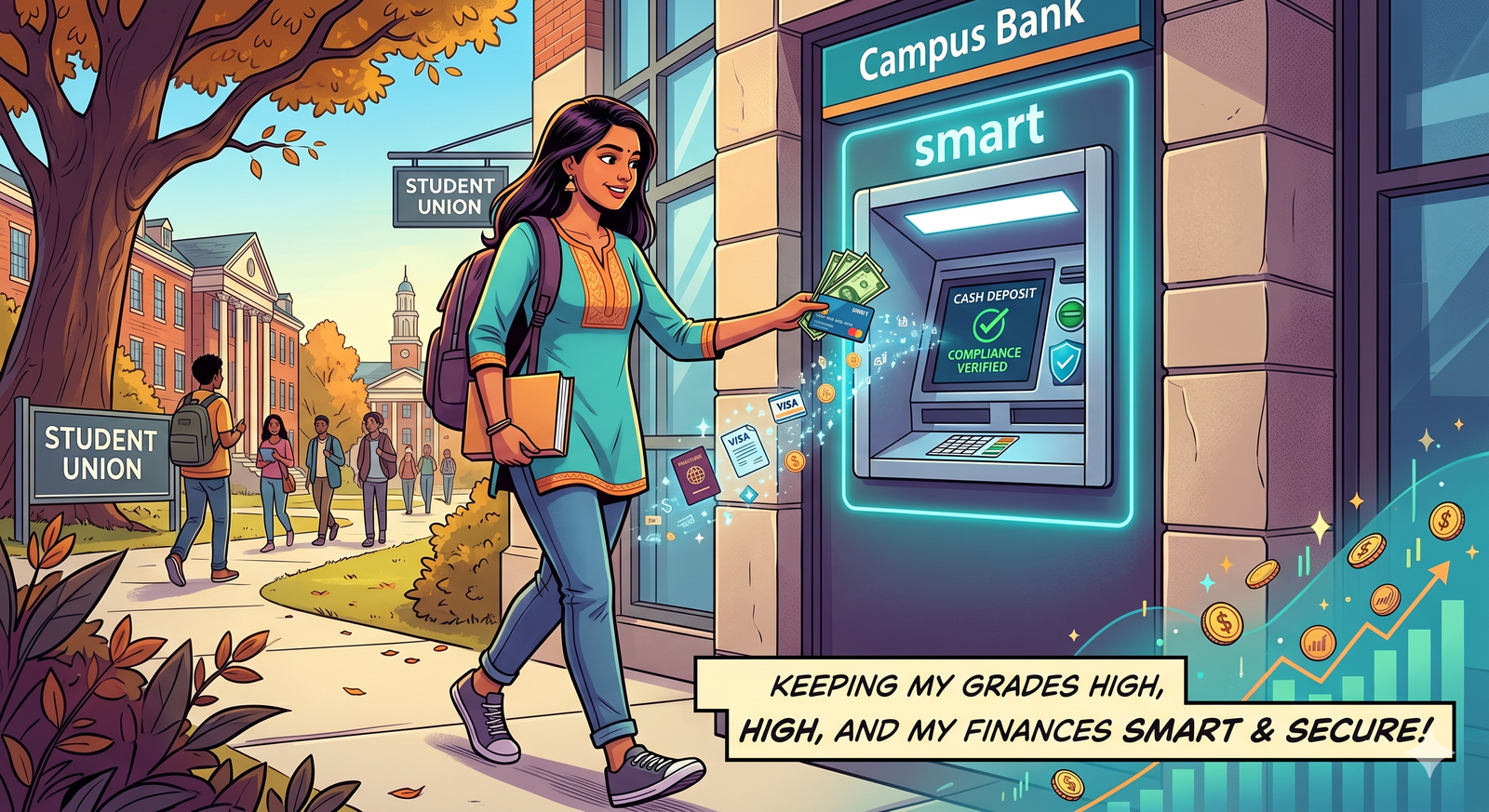
So, you’re an international student in the U.S., juggling assignments, midterms, and, of course, your personal finances. You’ve probably noticed that banks are becoming a lot more "chatty" lately when you walk up to the teller with your weekly cash deposits.
Don’t panic!
Here is the lowdown on what’s changing and how you can keep your bank account “chilled” and compliant.
The "New Normal" at the Bank
The government is basically telling banks to be extra vigilant. It’s not that they’re hunting for students, but they are hunting for "suspicious patterns." When banks are on high alert, their automated systems become a bit more sensitive to transactions that look, well, out of the ordinary.
Why Weekly Cash Deposits Might Ring a Bell
In banking terms, consistent small-to-mid-sized cash deposits can sometimes look like "structuring." This is when people try to break down large amounts of money into smaller chunks to avoid the mandatory reporting limits ($10,000).
Even if you’re just depositing your savings or money you’ve earned from your on-campus job, the bank’s software doesn't know that—it just sees a repetitive pattern.
How to Keep Your Account "Tension-Free":
You don’t have to stop using cash, but you do need to be "smart" about it. Follow these steps to keep your account in the clear:
Keep Your Files 'Up-to-Date': If you’ve recently renewed your passport or updated your I-20, make sure your bank has the latest copies. A mismatch in your status is the fastest way to get your account flagged.
The "Source" Matters: If the bank manager asks, "Where is this money from?" don’t get nervous! Just have a simple, honest answer. Whether it’s from your on-campus work or money sent from home, have a record of it (pay stubs, bank transfer receipts, etc.).
Go Digital Whenever Possible: If you can, try to move away from cash. Direct deposits from your employer or wire transfers from home are much easier to track and are considered "cleaner" transactions by the bank’s system.
Don't "Structure" Your Deposits: If you have a larger sum of money, just deposit it all at once rather than splitting it into four separate weekly trips. It sounds counterintuitive, but consistent, large, lump-sum deposits are often less suspicious than an identical pattern of smaller ones.
The Bottom Line
Think of this as the bank doing its "homework." As long as your finances are legitimate, you have absolutely nothing to worry about. Just keep your documentation handy, stay organized, and you’ll sail through these new requirements without any drama.
Keep focusing on those grades, and let the bank worry about the regulations!
💬 Discussion
RamMay 21, 2026 • 11:24 pm
Nice.